Still Moon Arts Society (headed up by Carmen Rosen of the Renfrew Ravine Moon Festival) is organizing a big environmental art/bike/food/fish event to raise awareness about local watershed issues. Please see the note below for workshop and event info.
Spirit Fish is March 21st!
We will have a fishy bike parade along the Central Valley Greenway bike path to the event site and at the site we will have a performance art and music tea party, make our prayers for the water andcelebrate the first day of Spring and World Water Day.
THE SPIRIT FISH CELEBRATION is taking place under the Kensington freeway access overpass in Burnaby - under it there flows Still Creek, home to herons, ducks, native plants, a bike path, evidence of temporary cardboard shelters, and huge columns that are reminiscent of old growth tree trunks or cathedral columns... but these columns are lifted in worship to the automobile overhead. Quietly beneath it and ignored we find the things we say as a culture that we treasure. So join us at this lovely spot to reconsider what we value, have a tea party, dress up, make art, listen to music, and be part of the wet, fishy celebration
SPIRIT FISH EVENT DAY CELEBRATION MARCH 21
1 pm - Fishy Bike Parade
Meet on the Central Valley Greenway bike path at Renfrew Skytrain
Station in Vancouver and follow the flow of Still Creek along the greenway.
2 pm – 4 pm - Event Site
Celebrate on the Central Valley Greenway bicycle route, just west of
Sperling Skytrain station. See map for details.
2 pm – 4 pm - art, music, and refreshments
3:15 pm - special Spirit Fish live music and dance performance along with
Prayers for the Water ritual
PRE-EVENT WORKSHOPS
All workshops are free to the public.
SPIRIT FISH BOAT WORKSHOPS
Create your own fish lantern boat. Bring your words, small images and glue-able items for your boat.
Sun. March 7th, 2-4 pm, Shadbolt Centre for the Arts, Mather House studio G
Sun. March 14th, 2-4 pm, Shadbolt Centre for the Arts, Mather House studio G
Thurs. March 18th, 3-6pm, Renfrew Community Centre, Rm. 110
FISHY COSTUME AND ART MAKING BLITZ
We're taking over the school during spring break! Come and make your fishy costume or installations with friends!
Wed. March 10th, 10am - 2pm, Windermere High School Still Moon room 204
Friday. March 12th, 10am - 2pm, Windermere High School Still Moon room 204
Sat. March 10th, 10am - 2pm, Windermere High School Still Moon room 204
FISHY BIKE DECORATING WORKSHOPS
Decorate your bike with your art and prayers for the fishy parade.
Tues. March 16th 3-5pm with the Windermere Bike Club
Thurs. March 18th, 3-6pm, Renfrew Community Centre, Rm. 110
Fri. March 19th, 4-6pm, Britannia Community Centre, Family Activity Room
Workshop locations:
Shadbolt Centre for the Arts - 6450 Deer Lake Avenue, Burnaby
Renfrew Community Centre - 2929 East 22nd Avenue, Vancouver
Windermere School - 3155 East 27th Avenue, Vancouver
Britannia Community Centre - 1661 Napier Street, Vancouver

Wednesday, February 24, 2010

Sweet Sovereignty: A Month Without Sugar
A few months ago I wrote about the politics of sugar and why it's a good idea to eat less of the sweet stuff. Because studies show that sugar is as addictive as heroin and cocaine, breeds parasites, and suppresses the immune system among a long list of negative health effects, I decided to take the first step in leveling off my sugar consumption and go 31 days without it.
While a month isn’t nearly enough to kick the sugar habit, it was a sufficient amount of time to notice significant positive physical and mental changes. Though I’ve heard that the first three days are the most difficult to get through, with symptoms of withdrawal usually consisting of headaches and irritability, the experience is different for everyone. For me, the first three days were a breeze, as was the rest of the week.
Then, around the seventh day I was hit hard by an intense headache and a horrible mood. The angry monster that was used to being treated to a chocolate buffet came out wanting its fix! It was made worse from not eating properly that day; in fact, that was probably what awoke it in the first place.
The key to eating less sugar or none at all is to eat proper food at all meals. It’s simple, but can be a challenge for those who aren’t in the habit of pairing -and very importantly, planning- balanced meals of protein, carbohydrates and veggies. The biggest downfall for many people is that they wait until they are near starvation point before they think about what to eat. Then they grab the nearest quickly available food, which most often is something loaded with sugar.
Did you know?? “Eating or drinking 100 grams (8 tbsp.) of sugar, the equivalent of two- and-a-half 12-ounce cans of soda, can reduce the ability of white blood cells to kill germs by 40 percent. The immune-suppressing effect of sugar starts less than thirty minutes after ingestion and may last for five hours.”
By having balanced meals and keeping fruit and snacks on hand, the benefits of going off sugar quickly become noticeable. By the third week, my usual sugar cravings started to transform. One day, as lunchtime neared, the image of a fresh salad popped into my mind. It was a strange apparition, since I generally don’t like salad; to me, it requires too much chewing and leaves me ravenous. But, as my body was getting used to eating less fast carbohydrates, the idea of a salad with crisp peppers, cherry tomatoes and tangy dressing became irresistible. I went to a deli around the corner, got some salad and chowed it down as if it were a plate of brownies. (And very importantly, had actual food –protein, carbs and vegetables- after the salad.)
Other changes during the month that came from eating less sugar were that my skin became clearer and that my emotions felt more balanced. Instead of getting sugar highs and crashes, I felt the difference of my blood sugar being more stable. However, because my body was used to getting energy quickly from sugar and white bread, I did feel a bit more tired as it worked to extract the energy from food that absorbs more slowly into the bloodstream. For that reason, a good idea is to have a spoonful of honey each day to give your body some sugar that it can easily integrate.
Overall, minimizing sugar intake is a way to claim your sovereignty. Independent from sweet cravings, the sugar industry that makes billions of dollars from people’s addictions, and the resulting poor health caused by bacteria and viruses that feed off sugar, the path toward living one's true purpose is clearer and just as sweet.
While a month isn’t nearly enough to kick the sugar habit, it was a sufficient amount of time to notice significant positive physical and mental changes. Though I’ve heard that the first three days are the most difficult to get through, with symptoms of withdrawal usually consisting of headaches and irritability, the experience is different for everyone. For me, the first three days were a breeze, as was the rest of the week.
Then, around the seventh day I was hit hard by an intense headache and a horrible mood. The angry monster that was used to being treated to a chocolate buffet came out wanting its fix! It was made worse from not eating properly that day; in fact, that was probably what awoke it in the first place.
The key to eating less sugar or none at all is to eat proper food at all meals. It’s simple, but can be a challenge for those who aren’t in the habit of pairing -and very importantly, planning- balanced meals of protein, carbohydrates and veggies. The biggest downfall for many people is that they wait until they are near starvation point before they think about what to eat. Then they grab the nearest quickly available food, which most often is something loaded with sugar.
Did you know?? “Eating or drinking 100 grams (8 tbsp.) of sugar, the equivalent of two- and-a-half 12-ounce cans of soda, can reduce the ability of white blood cells to kill germs by 40 percent. The immune-suppressing effect of sugar starts less than thirty minutes after ingestion and may last for five hours.”
By having balanced meals and keeping fruit and snacks on hand, the benefits of going off sugar quickly become noticeable. By the third week, my usual sugar cravings started to transform. One day, as lunchtime neared, the image of a fresh salad popped into my mind. It was a strange apparition, since I generally don’t like salad; to me, it requires too much chewing and leaves me ravenous. But, as my body was getting used to eating less fast carbohydrates, the idea of a salad with crisp peppers, cherry tomatoes and tangy dressing became irresistible. I went to a deli around the corner, got some salad and chowed it down as if it were a plate of brownies. (And very importantly, had actual food –protein, carbs and vegetables- after the salad.)
Other changes during the month that came from eating less sugar were that my skin became clearer and that my emotions felt more balanced. Instead of getting sugar highs and crashes, I felt the difference of my blood sugar being more stable. However, because my body was used to getting energy quickly from sugar and white bread, I did feel a bit more tired as it worked to extract the energy from food that absorbs more slowly into the bloodstream. For that reason, a good idea is to have a spoonful of honey each day to give your body some sugar that it can easily integrate.
Overall, minimizing sugar intake is a way to claim your sovereignty. Independent from sweet cravings, the sugar industry that makes billions of dollars from people’s addictions, and the resulting poor health caused by bacteria and viruses that feed off sugar, the path toward living one's true purpose is clearer and just as sweet.
Thursday, February 18, 2010
Community food security resources, jobs, & new community gardens
Growing Food in the City
In some countries like Cuba and Russia 80% and more of the vegetables consumed are grown by the urban population. That's big chunk out of the food budget, and a significant step towards greater independence from political and economic events beyond your control. This course consists of 20 three-hour sessions - spanning the entire growing season. Students have access to Gaia College's famous on-line resource for a year, for hours of self-directed learning.
Where: Burnaby, Victoria, and Duncan
When: Starting March 1, 2010
For more information and to register: Please visit Gaia College.
Whole Measures for Community Food Systems: Values-Based Planning and Evaluation
Hot off the press, this new planning and evaluation tool provides a lens for community food projects to dialogue about how their work affects whole communities. It includes a set of six core fields of value-based practices against which projects can measure the impact of their work.
Download the PDF!
Agriculture Awareness
Metro Vancouver is now accepting applications from non profit organizations interested in promoting agriculture awareness through public education about local agriculture production. A total of $30,000 will be granted in 2010.
For more information, or to apply visit the Metro Vancouver website.
Deadline: March 31, 2010
Toronto's new food strategy
February 16 was a historic day for municipal food policy. The Toronto Board of Health endorsed the consultation report "Food Connections: Toward a Healthy and Sustainable Food System for Toronto."
Congratulations to the Board of Health, the Medical Officer of Health, the Food Strategy Steering Group and staff on their work. Lauren Baker, Sustain Ontario’s director, made the deputation at City Hall.
Public Relations & Membership Development Co-ordinator
Are you a "People Person"? Are you great at generating public and media enthusiasm, interest & support for worthwhile initiatives? Check out this job posting (links to PDF).
Operations Assistant & Special Events Co-ordinator
Are you a list-making, detail-watching, natural born organizer? Do you love to make order out of chaos and do you enjoy making your creative visions reality? Check out this posting (links to PDF).
Postings for Market Managers & Market Assistants to follow soon. Please send resumes to the persons indicated on the postings. Only those chosen for an interview will be contacted. No phone calls please.
Our heartfelt thanks go out to Duke St. Early Learning Centre for allowing us to host a meeting at their site.
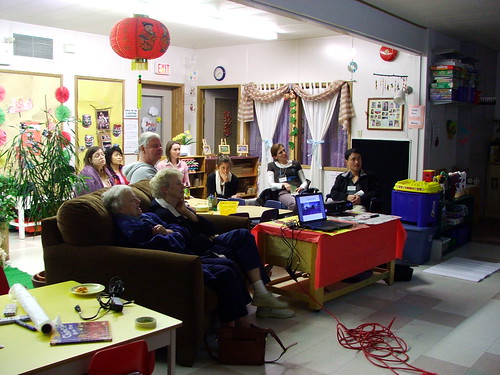
Local residents and interested gardeners
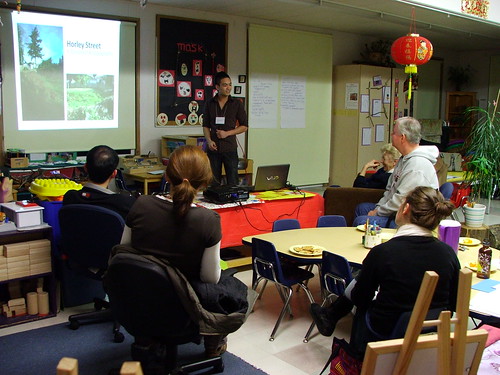
Jason Hsieh (Community Food Liaison) describes the benefits of community gardening.
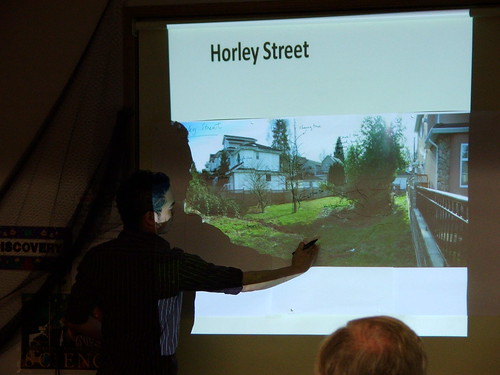
Mapping site assets.
Stay tuned for details on our next community consultation and our upcoming soil-testing workshop!
In some countries like Cuba and Russia 80% and more of the vegetables consumed are grown by the urban population. That's big chunk out of the food budget, and a significant step towards greater independence from political and economic events beyond your control. This course consists of 20 three-hour sessions - spanning the entire growing season. Students have access to Gaia College's famous on-line resource for a year, for hours of self-directed learning.
Where: Burnaby, Victoria, and Duncan
When: Starting March 1, 2010
For more information and to register: Please visit Gaia College.
Whole Measures for Community Food Systems: Values-Based Planning and Evaluation
Hot off the press, this new planning and evaluation tool provides a lens for community food projects to dialogue about how their work affects whole communities. It includes a set of six core fields of value-based practices against which projects can measure the impact of their work.
Download the PDF!
Agriculture Awareness
Metro Vancouver is now accepting applications from non profit organizations interested in promoting agriculture awareness through public education about local agriculture production. A total of $30,000 will be granted in 2010.
For more information, or to apply visit the Metro Vancouver website.
Deadline: March 31, 2010
Toronto's new food strategy
February 16 was a historic day for municipal food policy. The Toronto Board of Health endorsed the consultation report "Food Connections: Toward a Healthy and Sustainable Food System for Toronto."
Congratulations to the Board of Health, the Medical Officer of Health, the Food Strategy Steering Group and staff on their work. Lauren Baker, Sustain Ontario’s director, made the deputation at City Hall.
Farmers Market Jobs
Vancouver Farmers Markets is excited to announce 2 opportunities to join our team! We are dedicated to building farmers markets across Vancouver and are looking for people who are as passionate as we are about the future of local food in our city.Public Relations & Membership Development Co-ordinator
Are you a "People Person"? Are you great at generating public and media enthusiasm, interest & support for worthwhile initiatives? Check out this job posting (links to PDF).
Operations Assistant & Special Events Co-ordinator
Are you a list-making, detail-watching, natural born organizer? Do you love to make order out of chaos and do you enjoy making your creative visions reality? Check out this posting (links to PDF).
Postings for Market Managers & Market Assistants to follow soon. Please send resumes to the persons indicated on the postings. Only those chosen for an interview will be contacted. No phone calls please.
New Community Gardens
Here are a few photos of our most recent consultation meeting for the new community gardens.Our heartfelt thanks go out to Duke St. Early Learning Centre for allowing us to host a meeting at their site.
Local residents and interested gardeners
Jason Hsieh (Community Food Liaison) describes the benefits of community gardening.
Mapping site assets.
Stay tuned for details on our next community consultation and our upcoming soil-testing workshop!
Monday, February 8, 2010
Planting time!
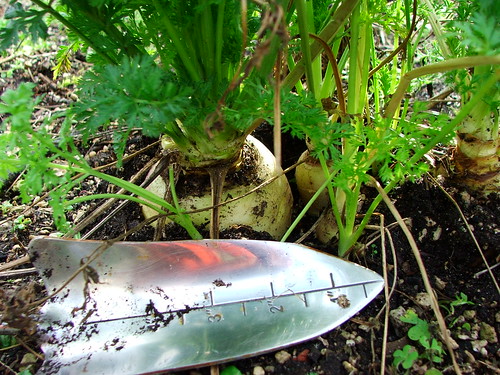
Big fat overwintered white carrot on the rooftop garden.
My, what a mild winter we are having here on the South Coast. It's been so consistently warm that we have put the mason bees out and are preparing the rooftop garden for planting. Depending on the microclimate in your garden, it's probably safe to plant early vegetables like broad beans, peas, arugula, and Asian greens. For more guidance, click here to download a copy of West Coast Seeds' seasonal planting chart.
The Rooftop Garden team is out and about putting things in order and we're looking forward to our first Rooftop workparty of 2010:
Wednesday February 17
5-6:30pm
Collingwood Neighbourhood House (roof)
Please join us, and bring your gardening gloves if you've got them. We look forward to seeing you.
Wednesday, February 3, 2010
Grow Your Own Garlic
As a gardening novice, the harvest that most impressed me last year was garlic. Easing it up from the ground, everything about it was a thing of beauty. Purple and white on the outside, it was gigantic and had ten times the fragrance and flavour of a store-bought bulb. Its huge fresh cloves were of a quality unlike anything at the most upscale grocer, and the crop of a few plants lasted into the fall with enough to give away to friends and family.
Garlic grows in cold weather and is to be planted from November to March. Last year, my garden partner Nancy took the initiative and planted it, so I didn’t know how easy garlic is to grow until I looked it up in my handbook, From the Garden to the Table. You just plant the cloves with the pointed end up, in holes 2 cm deep and 15 cm apart. Then you weed well, support the stems with lengths of string between stakes, and harvest when the stems have lost about half of their greenness and begin to topple over in July or August.
As most people know, garlic is a supremely healthy food. It’s antibacterial, antifungal, antiviral and antiparasitic. From what I’ve read, it seems as if garlic can do anything but bring back the dead, including boosting the immune system, defending white blood cells against cancerous ones, strengthening the heart, and aiding digestive conditions. Some people eat it plain and raw for the health benefits, but just eating dishes that include garlic as an ingredient is recommended for those who prefer flavours a little milder.
Or, once those bulbs are ready for harvest, try this tip from Boundary Garlic Farm:
“Steam or Stir Fry Garlic Flowers: The garlic tops, called flowers or garlic scapes, are a gourmet delight! Steam them whole and serve with melted butter like asparagus. Cut them into short lengths to add to a stir fry. They have a delicate garlic flavour which gives a subtly different and delicious flavour to the sauce.”
Garlic grows in cold weather and is to be planted from November to March. Last year, my garden partner Nancy took the initiative and planted it, so I didn’t know how easy garlic is to grow until I looked it up in my handbook, From the Garden to the Table. You just plant the cloves with the pointed end up, in holes 2 cm deep and 15 cm apart. Then you weed well, support the stems with lengths of string between stakes, and harvest when the stems have lost about half of their greenness and begin to topple over in July or August.
As most people know, garlic is a supremely healthy food. It’s antibacterial, antifungal, antiviral and antiparasitic. From what I’ve read, it seems as if garlic can do anything but bring back the dead, including boosting the immune system, defending white blood cells against cancerous ones, strengthening the heart, and aiding digestive conditions. Some people eat it plain and raw for the health benefits, but just eating dishes that include garlic as an ingredient is recommended for those who prefer flavours a little milder.
Or, once those bulbs are ready for harvest, try this tip from Boundary Garlic Farm:
“Steam or Stir Fry Garlic Flowers: The garlic tops, called flowers or garlic scapes, are a gourmet delight! Steam them whole and serve with melted butter like asparagus. Cut them into short lengths to add to a stir fry. They have a delicate garlic flavour which gives a subtly different and delicious flavour to the sauce.”
Tuesday, February 2, 2010
Community Gardens: Visioning and Design Session
We hope you will be able to join us for the upcoming design and visioning session:
Duke Street Early Learning Centre (Note: peanuts and peanut products are not permitted in this building)
2708 Duke St.
Tuesday Feb. 9
7-8:30pm
If you would like to attend, please advise Hilary Davies or Jason Hsieh. Please also pass on the word to other local residents who might be interested in the gardens.
We look forward to see you there!
Duke Street Early Learning Centre (Note: peanuts and peanut products are not permitted in this building)
2708 Duke St.
Tuesday Feb. 9
7-8:30pm
If you would like to attend, please advise Hilary Davies or Jason Hsieh. Please also pass on the word to other local residents who might be interested in the gardens.
We look forward to see you there!
Subscribe to:
Posts (Atom)