Just a reminder that Grant Watson of Grant's Gourmet Gardens will be leading a Soil Basics Workshop:
Saturday, March 27th
1:30-2:30pm
2723 Horley Street, near Kingsway and Earles (site of our newest local community garden).
The seed swap and plant sale originally scheduled for March 27th at Renfrew Community Centre has been postponed due to ongoing Renfrew Community Pool Renovations. However, you can catch our seed-swapping volunteers at the Seniors' Wellness Fair on Wednesday March 31st from 10-3pm.
Seniors' Wellness Fair
Renfrew Park Community Centre
2929 East 22nd Avenue
Vancouver, BC V5M 2Y3
(604) 257-8388
Wednesday March 31
10am-3pm
There will be a work party on the Rooftop Garden on March 31st from 5-7pm where we will be doing more garden bed preparation, weeding, and spring planting.
And by popular demand, here is the Community Kitchens schedule from now until the end of June:
Wednesday March 31, 5-8pm
Sunday April 11, 11am-2pm
Sunday April 25, 11am-2pm
Wednesday April 28, 5-8pm
Sunday May 9, 11am-2pm
Wednesday May 26, 5-8pm
Wednesday June 30, 5-8pm
Please note that child-minding will be provided for Sunday community kitchens only. Participation is free but space is limited. To RSVP for any of these dates please contact Stephanie.

Thursday, March 25, 2010

Tuesday, March 23, 2010
Will Allen Event Cancelled & Upcoming Talk with Ward Teulon
Due to emergency and unforeseen knee surgery, Will Allen will be unable to attend the event this Thursday, March 25 and the program has been cancelled. At this point there is no new date but we will keep you posted as soon as we hear more news.
Thursday, March 18, 2010
Baker's Market, Planting Journal, and Household Composting
In February 2010, a group of Katimavik youth volunteers set out into North Vancouver and Vancouver to find out some answers about environmental initiatives on the subject of food security. Please enjoy their short video documentary, Dig It!
Interviews with Mark Bomford, UBC Farm; Emanuel Langlois, Katimivik Participant; Heather Johnstone, Edible Gardens; Micahel Levenston and Sharon Slack, City Farmer; Chef Scott Rowe, Salvation Army; Nicole Robbins, Organics@Home; Melanie ter Borg and Karen Morton.
The Rooftop Garden Leadership Team has been hard at work! At our last two work parties we've pulled up many weeds, divided perennial herbs, pruned apple trees, added mushroom manure and other amendments to the garden beds, and planted some early spring crops (photos coming soon!).
So far we've planted radishes, peas, arugula, mixed Asian greens (including mizuna, giant red mustard, and boy choy), corn salad/mache, and spinach.
Are you confused about soil amendments? Take a look at this Vancouver Sun article. The writing is straightforward, and the author refers specifically to the soil conditions in the Metro Vancouver area.
Our next work party will take place on Wednesday, March 31st from 5-7pm. Please join us.
Vancouver city council has passed a motion that as of April 22 (Earth Day), residents will be permitted to add fruit and vegetables to their yard waste bins for composting.
Phase I of the plan allows people living in residential houses (excluding apartments and commercial buildings for now) to add tea leaves, coffee grounds, and fruit and vegetable scraps to their yard waste bins for regular pickup. About 35% of garbage from single-family residences is comprised of compostable food scraps; this plan will divert a signifiant amount of waste from landfills, and the resulting compost will provide rich nourishment for the soil in our region.
For more information, please visit the City website.
Inspired by Vancouver's many farmers' markets, the new Baker's Market brings you talented artisanal bakers selling fresh breads, soft German pretzels, butter croissants, chocolate croissants, cupcakes, yummy cookies, hand made chocolates, brownies, marshmallows, gingerbread cookies, mini bundt cakes, muffins and much more! Wedding cakes are on display too.
If you are a baker of any kind, home baker, student baker, pastry chef, bakery owner, wedding cake decorator, cookie baker...this is a great opportunity to show off your skills and sell your baked treats. Interested in visiting the market or becoming a vendor? Please visit The Baker's Market website.
Interviews with Mark Bomford, UBC Farm; Emanuel Langlois, Katimivik Participant; Heather Johnstone, Edible Gardens; Micahel Levenston and Sharon Slack, City Farmer; Chef Scott Rowe, Salvation Army; Nicole Robbins, Organics@Home; Melanie ter Borg and Karen Morton.
Planting Journal
The Rooftop Garden Leadership Team has been hard at work! At our last two work parties we've pulled up many weeds, divided perennial herbs, pruned apple trees, added mushroom manure and other amendments to the garden beds, and planted some early spring crops (photos coming soon!).
So far we've planted radishes, peas, arugula, mixed Asian greens (including mizuna, giant red mustard, and boy choy), corn salad/mache, and spinach.
Are you confused about soil amendments? Take a look at this Vancouver Sun article. The writing is straightforward, and the author refers specifically to the soil conditions in the Metro Vancouver area.
Our next work party will take place on Wednesday, March 31st from 5-7pm. Please join us.
Curbside Compost Pickup Begins April 22
Vancouver city council has passed a motion that as of April 22 (Earth Day), residents will be permitted to add fruit and vegetables to their yard waste bins for composting.
Phase I of the plan allows people living in residential houses (excluding apartments and commercial buildings for now) to add tea leaves, coffee grounds, and fruit and vegetable scraps to their yard waste bins for regular pickup. About 35% of garbage from single-family residences is comprised of compostable food scraps; this plan will divert a signifiant amount of waste from landfills, and the resulting compost will provide rich nourishment for the soil in our region.
For more information, please visit the City website.
The Baker's Market
Inspired by Vancouver's many farmers' markets, the new Baker's Market brings you talented artisanal bakers selling fresh breads, soft German pretzels, butter croissants, chocolate croissants, cupcakes, yummy cookies, hand made chocolates, brownies, marshmallows, gingerbread cookies, mini bundt cakes, muffins and much more! Wedding cakes are on display too.
If you are a baker of any kind, home baker, student baker, pastry chef, bakery owner, wedding cake decorator, cookie baker...this is a great opportunity to show off your skills and sell your baked treats. Interested in visiting the market or becoming a vendor? Please visit The Baker's Market website.
Wednesday, March 10, 2010
Upcoming Gardening Workshops
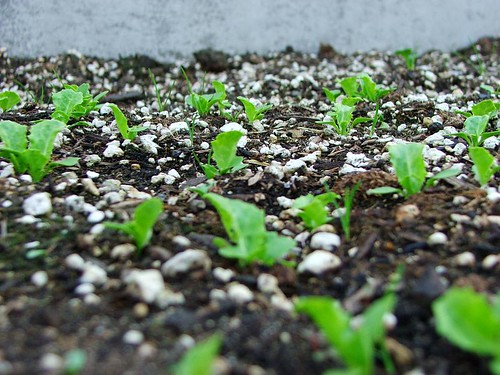
Hi folks! Here's a gentle reminder that the Renfrew Collingwood Garden Club and Workshop Series meets on the second Thursday of every month at 7pm at Collingwood Neighbourhood House. The topic for Thursday March 11th is Seed Starting Basics.
The April 8th workshop will be about garden bed preparation (more details to follow as they become available).
Additionally, Grant Watson of Grant's Gourmet Gardens will be leading a Soil Basics Workshop:
Saturday, March 27th
1:30-2:30pm
2723 Horley Street (site of our newest local community garden).
RSVPs for these events are much appreciated and can be sent to Stephanie.
Thursday, March 4, 2010
Soil, Slugs, and Saving the World
 A Review of The Vegetarian Myth: Food, Justice and Sustainability by Lierre Keith
For Lierre Keith , growing her own food led toward eating meat for the first time in 20 years. As a vegan -someone who doesn’t eat meat, eggs, or milk- she wanted to refrain from killing any creature. But eventually, the slugs that invaded her lettuce patch taught her that whether it’s in your back yard or in the California Valley, somebody has to die in order for you to eat.
Through learning about the more than one million living organisms in a tablespoon of soil to the land cleared and rivers diverted for annual monocrops, Keith began her journey toward a more whole understanding of sustainability and her place in the world. Since soil needs the nitrogen, phosphorous and potassium that comes either from the blood, bones and manure of animals or from fertilizers made from fossil fuels, she was pressed to make a choice to embrace the web of life or distance herself further from it.
The organic garden she created came to include chickens who eat the insects and grubs, and cows that fertilize the land. Combined with perennial polyculture, (plants that come back year after year and whose roots help keep the soil and its nutrients in place) the result was plentiful food and topsoil being created instead of destroyed.
Keith underscores the point that in regards to food security, soil quality is of utmost importance. Because of the damaging effects of industrial agriculture, the topsoil in North America used to be 12 feet deep, but now it can only be measured in inches. Soil needs to eat too, and without animals or fossil fuels which are not sustainable, it becomes dust, unable to support life. “More of the same won’t save us,” she responds to those who advocate a vegetarian diet dependent on grains and monoculturally farmed vegetables.
Approaching the reasons to adopt a vegetarian lifestyle from moral, political and nutritional perspectives, Keith thoroughly explains common misconceptions such as that rather than taking up grain that could feed hungry people, factory farming of animals was made possible with the invention of synthetic fertilizers. Thus, with their function of fertilizing fields obsolete, animals weren’t needed on farms anymore and were put into feedlots. “And then the truly bizarre began to make economic sense: the mountain of corn that the US produced had nowhere else to go but into animals.”
Though heavy on the dark details of the effects of industrial farming, maybe they bear repeating for those who haven’t already read ten books outlining how close we are to the apocalypse. However, it’s in writing about the nutritional aspects of vegetarianism where Keith hits closest to home, describing her own experience with depression, joint degeneration, menstrual cycle imbalances, and hypoglycemia. Here, there are also many eye-openers, such as that cholesterol and saturated fat have zero correlation to heart disease, but are in fact needed for nutrient absorption and serotonin production. She makes it clear by in-depth research how, on the physical plane, a vegan diet can result in a long list of health imbalances such as worn out insulin receptors, bone and joint degeneration, inflammation and unnamed low-level pain, thyroid strain, aggression, depression, and stomach and skin problems. What could have been more emphasized is that everybody's body is different, so that some people can live for years as vegans and feel fantastic, while others like Keith notice their health go down the drain while they hang on to their ideals and underlying emotional and/or spiritual imbalances.
A touchy subject to begin with, the discussion of vegetarianism is intensified since many vegans or vegetarians tend to make not eating meat part of their identity. This book addresses what has become something of an unassailable belief system: that if we only eat vegetables and grains, or only fruit, or even if we become pure enough to exist on air, the world would be a better place -animals would suffer less, people would be healthier and no-one would starve, the earth wouldn’t be dying, the human race would be more evolved.
Courageously calling out for co-operation, of joining forces for a just and sustainable world, The Vegetarian Myth is much more than a book about food. “…In order to save the world we must know it, and the vegetarians don’t, not any more than the rest of the civilized, especially the industrially so,” writes Keith. “We can dominate or we can participate, but there is no way out.” Offering detailed analysis and no easy solutions, this book is in a sense a much-appreciated education in the basics of life for most of us who live distanced from our food supply and have no idea that, for example, cows get sick from eating grain because their stomachs are naturally designed to eat grass.
Of the many vital messages that The Vegetarian Myth brings, perhaps the most fundamental is “Listen to your body.” Doing so requires hearing beyond addictions and what anybody says you should do, and accepting, not punishing, oneself. Starting with welcoming the nutrients and energy of food into our bodies with appreciation, gratitude, and reverence for the energy, water, land and life that contributed to produce it –slugs included- we may begin to achieve the dream of a harmonious world.
You can preview The Vegetarian Myth: Food, Justice and Sustainability on Google Books.
Tuesday, March 2, 2010
Upcoming: Robin Wheeler, Will Allen, and Funding
Agriculture Awareness in Metro Vancouver
Metro Vancouver supports agriculture awareness by providing funding grants to non profit organizations to educate the public about local agriculture production. A total of $30,000 will be granted in 2010.
Organizations interested in applying for a funding grant should review the eligibility criteria below and submit a completed application form at the Metro Vancouver website: http://www.metrovancouver.org/planning/development/agriculture/Pages/AgricultureAwarenessApplicationForm.aspx (Scroll up the page to see the mandatory requirements)
Application deadline: March 31, 2010
For further information on the grant program: Contact Theresa Duynstee at 604-451-6024 or send her an email
Growing Out of Hunger
Thursday, March 25, 7-9 pm
Featuring Will Allen, CEO, Growing Power Community Food Centre, Milwaukee & Chicago. Find out how this former professional basketball player, corporate sales executive and urban farmer is feeding 10,000 people and starting a community food revolution out of his inner-city farms in Milwaukee and Chicago. Will Allen is transforming the cultivation, production, and delivery of healthy foods to underserved urban populations http://www.growingpower.org/blog/. This event is free, however pre-registration is required.
Location: Croatian Cultural Centre, 3250 Commercial Drive (and 14th), Vancouver
For more information and to register: Visit the SFU website.
Workshops with Robin Wheeler
Coming up on Saturday, March 6th and Sunday, March 7th. Her offerings touch on a variety of subjects, including gardening and urban agriculture, food security, community building, traditional skills, and sustainability.
Robin is the founder of The Sustainable Living Arts School, and the author of Gardening for the Faint of Heart and Food Security for the Faint of Heart. She lives on the Sunshine Coast, and brings a vast wealth of knowledge and experience with her to each gathering.
The workshops are always a real treat. You can expect your knowledge to expand and your soul to be delighted...and sometimes for your hands to get dirty.
We hope you'll join us!
Cheers,
Ross Moster
Village Vancouver
www.villagevancouver.ca
Saturday, March 6th
Introduction to Medicine Making 9am-noon
Mount Pleasant
There are so many plants that are safe, easy to recognize and locate, and effective. We will learn some recognition techniques, and then how to make teas, poultices, tinctures and infused oils for personal use. We'll learn about solvents, supplies and storage.
Designing for Long Term Storage 1:15-2:45 pm (potluck at 12:30)
Grandview Woodland
Food storage is missing from our modern habit and building design. We will discuss food preservation (tubers, grains, onions, etc.) and how to choose locations for many food types so that appropriate storage areas can be created in apartments and houses. We'll also examine common problems and strategies to reduce waste.
Intentional Community - Shapes in Sharing 3-4 pm
Grandview Woodland
City dwellers have many skills and resources all around them, but may not have a mechanism for organizing and drawing on those skills in times of trouble. This class will look at the different shapes in sharing that take place so easily in rural communities and may need a boost in the city. We will talk about building trust and safeguarding our precious possessions while opening up to a wider community and its valuable support.
Apartment and Container Gardening 4:30-6 pm
Kitsilano
We will cover the problems of tiny gardens and will address some cures. We will talk about the best plants for small gardens and how to get the biggest, healthiest harvest possible.
Sunday, March 7th
Food Preservation 9-10:30 am
Kitsilano
In times of rising food prices, it is great to have skills in taking advantage of sales and seasonal plenty and preserving it for future times. We will cover the Top Ten preservation techniques and how to get confident in their use.
Edible Landscaping 11am-1pm (potluck to follow)
Main St.
This class teaches all aspects of edible landscaping - what it is and how to design one for yourself. We will look at areas such as microclimating, soil improvement and plant selection. In most cases we have time to go out and start one in the host's own garden.
Intensive Urban Microfarming 2-5pm
Fairview
Getting the most out of a normal urban garden can take imagination. This class assists us to boost production through a deeper understanding of microclimating, and of lateral growing, food cycles, succession planting, "shoulder" cropping and much more.
All workshops are offered on a pay what you can basis. A one hour workshop usually costs $10 to $15; 1 1/2 hour workshops $15 to $20; 2 hour workshops $25 to $30, and three hour workshops around $40. Our contributions to these workshops make it possible for teachers like Robin to expand and to deepen the scope of the important educational and social change work that they are involved in, particularly in these uncertain times.
To register:
(or to find out more about hosting a future workshop), please contact Ross at rmoster@flash.net. (Enrolment is limited to 15 people per workshop.)
*********
Village Vancouver's food networking get togethers with Robin Wheeler and others are community based gatherings which help participants connect with others who share a desire to engage around food and sustainability on a neighbourhood level.
These workshops are part of an ongoing VV series designed to help individuals, neighbourhoods, and communties transition into living well using substantially less energy. In 2009, we offered approximately 40 workshops. In 2010, topics are expected to include gardening, seed saving, energy reduction, community building, beekeeping, composting, food preservation, neighbourhood food networks, and backyard chickens.
Village Vancouver is the official Transition Town hub for Vancouver and the Metropolitan area, and there are neighbourhood initiatives in almost all of the neighbourhoods where Robin's workshops are being held. Transition Towns are positive, grassroot responses to the problems posed (and opportunities offered) by climate change and natural resource depletion. TT's started in England less than five years ago and have quickly spread all over the world.
We're currently engaged in organizing another 2 day Transition in Vancouver: from fossil fuel dependence to resilience workshop - to be offered at Langara College in the Spring. Stay tuned for details.
For further information on VV: www.villagevancouver.ca or Welcome to Village Vancouver in Common Ground magazine www.commonground.ca. (June, July, and September) For more information on Transition Towns: www.transitiontowns.org.
There's also a Sustainable Living Arts School in Vancouver: www.slas.ca.
Subscribe to:
Posts (Atom)